Korean Soups and Stews
Highlighted under: Cuisines Without Borders
Discover the rich and comforting world of Korean soups and stews, perfect for any occasion.
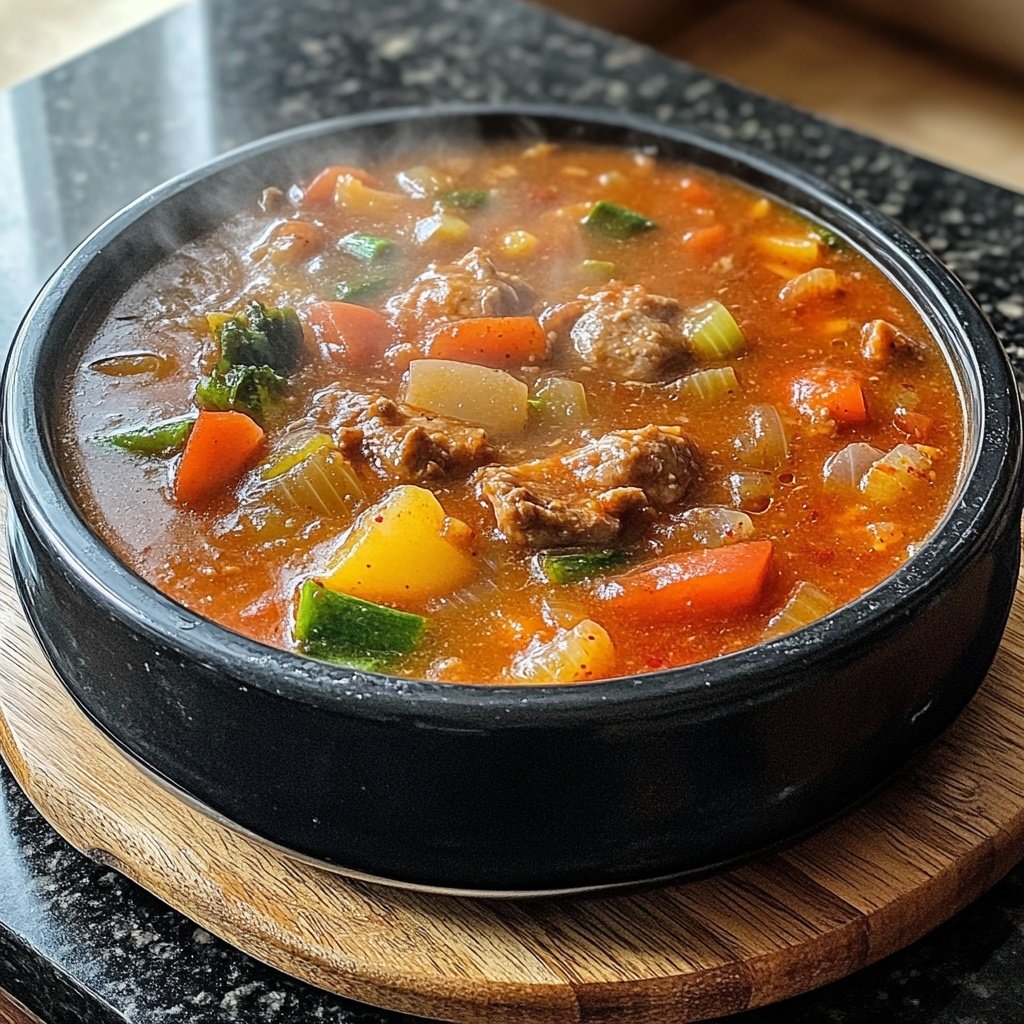
Korean soups and stews are a staple in Korean cuisine, known for their deep flavors and hearty ingredients. From spicy kimchi jjigae to comforting doenjang jjigae, each dish tells a story of tradition and warmth.
Why You'll Love This Recipe
- A perfect blend of bold spices and fresh ingredients
- Hearty and satisfying, perfect for cold days
- Easy to customize with your favorite proteins and vegetables
The Heart of Korean Cuisine
Korean cuisine is renowned for its bold flavors and diverse ingredients, and soups and stews are at the heart of this culinary tradition. These comforting dishes are often enjoyed as a staple in Korean households, bringing families together around the dinner table. With a variety of textures and tastes, Korean soups and stews showcase the balance of savory, spicy, and umami flavors that define this vibrant cuisine.
Whether you're in the mood for a hearty beef stew or a light vegetable soup, Korean soups and stews offer something for everyone. They are typically served with rice, allowing you to enjoy a complete meal in a single bowl. The use of gochujang and other spices not only adds depth to the dish but also provides health benefits, making these comforting meals as nourishing as they are delicious.
Customizing Your Soup or Stew
One of the best aspects of Korean soups and stews is their versatility. You can easily customize them based on your dietary preferences or what ingredients you have on hand. Feel free to swap out vegetables or proteins, using seasonal produce or whatever is available in your pantry. This adaptability makes it easy to create a dish that suits your taste and dietary needs while still maintaining the essence of Korean flavors.
If you're looking for a protein boost, consider adding chicken, beef, or seafood. For a vegetarian option, tofu is an excellent choice that absorbs the flavorful broth beautifully. Don't hesitate to experiment with different vegetables—kale, carrots, and even sweet potatoes can add unique flavors and textures to your dish.
Serving Suggestions and Pairings
When serving Korean soups and stews, presentation can enhance the dining experience. A simple garnish of green onions not only adds a pop of color but also a fresh crunch that balances the dish's richness. Accompany your soup with a side of kimchi—or other pickled vegetables—for a traditional touch that complements the flavors and adds a probiotic punch to your meal.
Pair your soup or stew with steamed rice or a bowl of noodles for a filling and satisfying meal. For an extra layer of flavor, consider serving it with a splash of sesame oil or a sprinkle of sesame seeds on top. These simple additions elevate your dish and make it feel like a special occasion, perfect for family gatherings or cozy nights in.
Ingredients
Gather the following ingredients before you start cooking:
Ingredients for Korean Soups and Stews
- 1 tablespoon vegetable oil
- 1 onion, chopped
- 2 garlic cloves, minced
- 1-inch piece of ginger, minced
- 2 cups vegetable or beef broth
- 1 tablespoon gochujang (Korean chili paste)
- 1 tablespoon soy sauce
- 1 tablespoon sesame oil
- 2 cups chopped vegetables (like zucchini, mushrooms, and spinach)
- 200g tofu or your choice of protein
- Salt and pepper to taste
- Green onions, for garnish
Make sure to have all ingredients ready for a seamless cooking experience!
Instructions
Follow these steps to create your delicious Korean soups and stews:
Heat the Oil
In a large pot, heat the vegetable oil over medium heat. Add the chopped onion and sauté until translucent.
Add Aromatics
Stir in the minced garlic and ginger, cooking for about 1 minute until fragrant.
Combine Broth and Seasonings
Pour in the broth and add gochujang, soy sauce, and sesame oil. Bring to a simmer.
Add Vegetables and Protein
Add your choice of chopped vegetables and tofu. Cook for an additional 15-20 minutes until the vegetables are tender.
Season and Serve
Adjust seasoning with salt and pepper. Serve hot, garnished with green onions.
Enjoy your Korean soups and stews with a side of rice or bread!
Pro Tips
- Feel free to experiment with different proteins such as chicken, beef, or seafood to suit your taste.
Tips for Perfecting Your Soup
To achieve the perfect balance of flavors in your Korean soup or stew, allow the ingredients to simmer together for at least 15 to 20 minutes. This cooking time ensures that the spices meld beautifully with the broth, resulting in a rich and savory base. If you prefer a thicker consistency, consider blending a portion of the soup and then returning it to the pot to enhance the texture.
Taste as you go! Adjusting seasoning at various stages of cooking can help you achieve the ideal flavor profile. Don't be afraid to add a little more gochujang for heat or soy sauce for saltiness, depending on your personal preference.
Storing and Reheating Leftovers
If you find yourself with leftovers, storing your Korean soup or stew is easy. Allow it to cool to room temperature before transferring it to an airtight container. It can be refrigerated for up to three days or frozen for longer storage. Just be mindful that some vegetables may lose their texture when reheated, so you may want to add fresh vegetables when warming the dish again.
To reheat, simply warm the soup on the stovetop over medium heat, stirring occasionally until heated through. If the soup appears too thick, you can add a splash of water or broth to reach your desired consistency. Enjoy the convenience of a quick and satisfying meal ready to nourish you any day of the week!
Questions About Recipes
→ Can I use frozen vegetables?
Yes, frozen vegetables work well in this recipe. Just add them in the last 10 minutes of cooking.
→ How spicy is this dish?
The spice level depends on the amount of gochujang you use. Start with less if you're sensitive to spice and adjust to your taste.
→ Can I make this recipe vegetarian?
Absolutely! Use vegetable broth and tofu or additional vegetables for a delicious vegetarian version.
→ How do I store leftovers?
Store any leftovers in an airtight container in the fridge for up to 3 days. Reheat on the stove before serving.
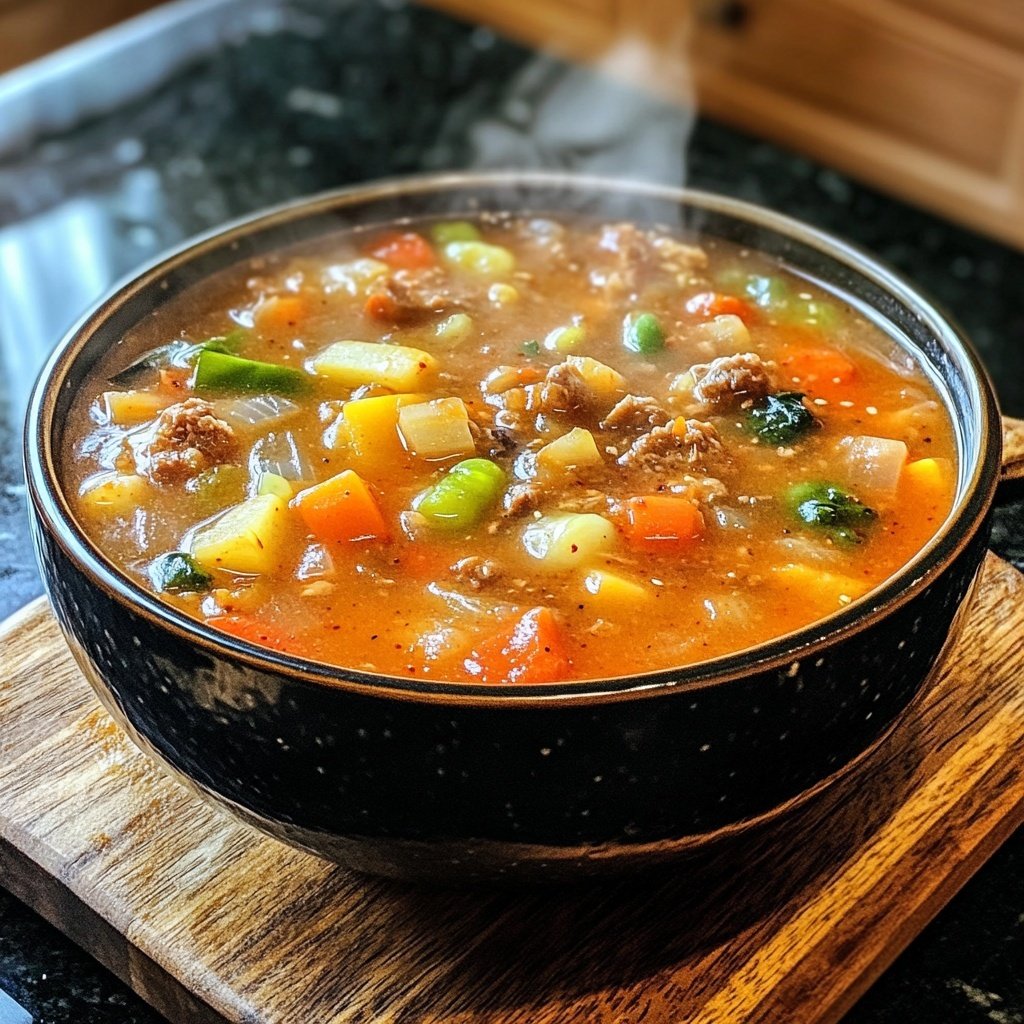
Korean Soups and Stews
Created by: Amber Walsh
Recipe Type: Cuisines Without Borders
Skill Level: Intermediate
Final Quantity: 4 servings
What You'll Need
Ingredients for Korean Soups and Stews
- 1 tablespoon vegetable oil
- 1 onion, chopped
- 2 garlic cloves, minced
- 1-inch piece of ginger, minced
- 2 cups vegetable or beef broth
- 1 tablespoon gochujang (Korean chili paste)
- 1 tablespoon soy sauce
- 1 tablespoon sesame oil
- 2 cups chopped vegetables (like zucchini, mushrooms, and spinach)
- 200g tofu or your choice of protein
- Salt and pepper to taste
- Green onions, for garnish
How-To Steps
In a large pot, heat the vegetable oil over medium heat. Add the chopped onion and sauté until translucent.
Stir in the minced garlic and ginger, cooking for about 1 minute until fragrant.
Pour in the broth and add gochujang, soy sauce, and sesame oil. Bring to a simmer.
Add your choice of chopped vegetables and tofu. Cook for an additional 15-20 minutes until the vegetables are tender.
Adjust seasoning with salt and pepper. Serve hot, garnished with green onions.
Extra Tips
- Feel free to experiment with different proteins such as chicken, beef, or seafood to suit your taste.
Nutritional Breakdown (Per Serving)
- Calories: 450 kcal
- Total Fat: 22g
- Saturated Fat: 4g
- Cholesterol: 0mg
- Sodium: 700mg
- Total Carbohydrates: 50g
- Dietary Fiber: 7g
- Sugars: 5g
- Protein: 15g